
Weekend Read 18 July 2026
Good morning. Across the years, I have written about clinical studies and peer-reviewed evidence, about bioavailability and cellular mechanisms and the gap between what a compound promises and what it actually delivers. All of that matters, it matters rather a lot, yet behind rather a lot of compounds there is a story that often predates the science by a long time, sometimes by centuries, so after writing about Weston Price and vitamin K last weekend, I want to take a moment in time to follow through.
Humans have always known, intuitively and often without any means of proving it, that certain plants and certain substances have the power to make us well. The ancient Egyptians used Propolis to embalm the dead, somehow understanding its ability to resist decay, thousands of years before anyone could explain the antimicrobial compounds responsible. Aligning with profound ancient wisdom, Ayurvedic physicians were prescribing Ashwagandha and Turmeric over four thousand years ago, putting in place a system of botanical medicine which has increasingly been validated by modern science.
Ashwagandha is often described as one of the most notable substances in Ayurveda and has been classified as a ‘Rasayana’ a rejuvenating tonic for millennia, but it wasn’t until 1957 that a Russian toxicologist, Nikolay Lazarev, identified adaptogens as ‘substances that increase non-specific resistance against multiple stressors’. Introducing the idea that adaptogens regulated the release of stress hormones produced by the adrenal glands, he determined that adaptogens helped to restore the body’s natural immune function, supporting the resistance of stress, which in turn helps to reduce fatigue and exhaustion.
Since that time, research has indicated that adaptogens help improve attention, stimulating mental performance which has been negatively impacted by stress, they increase endurance in situations caused by fatigue, they help balance hormone levels and they also help to keep cortisol levels in check. With Shabir’s article on adaptogens linked below, Ashwagandha is noted for helping the body to cope with everyday stressors, while Rhodiola, another adaptogen, helps to lower anxiety and fatigue and is a key compound in Magnolia Rhodiola Complex, our bestselling supplement for stress and anxiety.
VH Editorial: Adaptogens: What Are They And Which Ones Should You Choose; KSM-66 Ashwagandha Plus by Wild Nutrition; DoSe Magnolia Rhodiola Complex
With both Ashwagandha and Turmeric being used in Ayurvedic medicine for at least four thousand years, Turmeric, known botanically as Curcuma longa, appeared in ancient Sanskrit texts as a treatment for a remarkable range of conditions, from digestive complaints and liver disorders to skin disease and wound healing. Arriving in Europe via the spice trade in the thirteenth century, it has been a fixture of Indian cooking, ceremony and medicine ever since.
We now know that Turmeric’s active compound, Curcumin, is responsible for most of its medicinal properties and we also know that Curcumin is one of the most extensively studied natural anti-inflammatory compounds in existence. However, Curcumin is notoriously poorly absorbed in its standard form and the challenge has always been its bioavailability, which is why I often write about Sabinsa’s C3 Complex because it addresses that challenge directly.
C3 Complex is a patented, clinically studied form of Curcumin containing three distinct curcuminoids working synergistically, rather than relying on a single compound alone and it is paired with Bioperine, a patented black pepper extract which has been shown to enhance the bioavailability of Curcumin by up to 2000%. The result of that peer-reviewed clinical research illustrates the difference between taking a supplement which sits largely unabsorbed in the digestive tract and one that actually reaches the cells and tissues where its anti-inflammatory properties can do meaningful work.
VH Editorial: Turmeric: The Spice With Health Benefits; DoSe Turmeric Curcumin C3 Complex
Contemporary science has enabled Curcumin to fulfil its full potential, but staying with compounds that predate science, we are now going to take a look at Magnesium. Magnesium, as an element, has existed since the formation of the earth, yet its role in human physiology was only properly understood in the twentieth century. It is worth exploring the modern understanding of Magnesium because it is involved in over 300 enzymatic reactions in the body, supporting everything from energy production and muscle function to blood sugar regulation, bone density and the normal functioning of the nervous system.
In many ways, Magnesium is foundational to almost every significant process our bodies carry out, yet the majority of us are Magnesium deficient because the modern diet simply does not deliver the levels our bodies require and as such it is often referenced as the missing link in our bodies. Rigorous research has now determined that Magnesium has numerous health benefits including addressing low energy and fatigue, hormonal imbalances, insomnia, bone health, cramps and spasms, anxiety, nerves and irritability, as well as skin health.
There are many different forms of Magnesium and although each Magnesium compound carries specific benefits, we believe that a complex of Magnesium compounds provide an optimal solution for our health and wellbeing. Magnesium Complex is an advanced supplement containing eight forms of Magnesium providing the full spectrum of benefits. My final comment here is that I genuinely believe that we have become so conditioned to living with a Magnesium deficiency, such as disrupted sleep and low mood, we often overlook the consequence of a missing mineral which has been in existence since the beginning of time.
VH Editorial: Magnesium Supplements: Benefits, Deficiencies & Side Effects; DoSe Magnesium Complex
In all of this, Fulvic Acid represents something altogether older, more elemental perhaps. It is not a plant, not an herb, not something cultivated or harvested, but something formed slowly, without human intervention, over hundreds of millions of years beneath the earth’s surface. In the context of this Weekend Read, Fulvic Acid probably belongs here more than almost anything else because it is, in many ways, the distilled nutritional legacy of ancient plant life.
Being the slow accumulation of decomposed organic matter, compressed and transformed over geological time, Fulvic Acid is one of the most bioactive and mineral-rich substances found in nature. There is no physician who first prescribed it, no ancient text that first documented it, no single moment of discovery, it simply existed, quietly and patiently in the earth beneath our feet, waiting for us to understand what it was. In and of that understanding, we have been endorsing and recommending Fulvic Acid for almost two decades as we have long believed that it really is the elixir of life.
VH Editorial: Fulvic Acid: The Elixir Of Life; Fulvic Elixir by Ful.Vic.Health
Actually, I think it is appropriate to share, in the context of Magnesium and Fulvic Acid, a quote from Dr Linus Pauling, the winner of two Nobel Prizes where he stated that ‘you can trace every sickness, every disease, and every ailment, ultimately to a mineral deficiency’. Dr Linus Pauling was one of the most rigorous scientific minds of the twentieth century, whose work on chemical bonds and molecular biology changed the way we understand life itself. And I’ll leave it there.
Neither Collagen Tripeptide Complex nor NAD+ Generator has an ancient story behind it, their story is entirely modern. While ancient compounds restore what we have always needed, these modern cutting-edge formulations prompt the body to do what it has quietly forgotten to do on its own, yet it is the way they do it which is so incredibly important. And I’ll begin with Collagen Tripeptide Complex.
Collagen supplementation is everywhere, available in powders, drinks and capsules, they mostly claim the same thing, the promise of luminous skin, strong joints and glossy hair, except there is one problem, they often deliver rather less than they suggest. The reason for this is not collagen itself, which is a genuinely remarkable protein, but the form in which most supplements deliver it. Conventional hydrolysed collagen breaks the protein into fragments, but those fragments are, more often than not, simply too large to cross into cellular membranes and do the work that actually matters.
Tripeptides are different. They are exceptionally small chains of just three amino acids, and rather than attempting to supplement collagen directly, they function as cellular messengers, signalling the body to produce fresh collagen of its own. That distinction, between passively supplement and actively stimulating, is actually a crucial distinction, which has been clinically evaluated, and one more thing. Historically, it was recommended to take Collagen Type 1 and 3 for skin, hair and bones and Type 2 Collagen for joints, but with studies indicating that Collagen Tripeptides are incorporated into skin, bones, joints, skin and hair, the science has moved on considerably.
VH Editorial: Does Your Collagen Supplement Contain Collagen Tripeptides; DoSe Collagen Tripeptide Complex
NAD+ (Nicotinamide Adenine Dinucleotide) is a coenzyme found in every single cell in the body and it is fundamental to how those cells produce energy, repair DNA and communicate with each other. NAD+ has been the subject of intense research over the past decade, most specifically because scientific research has determined that levels of NAD+ decline significantly as we age and that this decline is closely linked to many of the changes we associate with growing, such as slower cellular repair.
The difficulty has always been that NAD+, as a molecule, is too large and too unstable to survive the digestion process, so introducing it directly, as a supplement, simply does not work. NAD+ Generator takes an entirely different approach, delivering the specific precursor compounds that the body’s own cells use to manufacture NAD+. Rather than attempting to supplement the finished molecule, it supports that pathway that produces NAD+ by way of a next-generation patented extract, RiaGev, which outperforms Nicotinamide Ribose (NR) and Nicotinamide Mononucleotide (NMN).
VH Editorial: NAD+ Supplements: Benefits & Side Effects; DoSe NAD+ Generator
I want to close by saying that these are the stories that matter, these are the stories that support our health and wellbeing, distinguishing between the ancient and the modern, yet somehow, in the telling, they become one and the same story. Simply separated by time, by patience and by the slow process of evidence catching up with instinct, they are not that different.
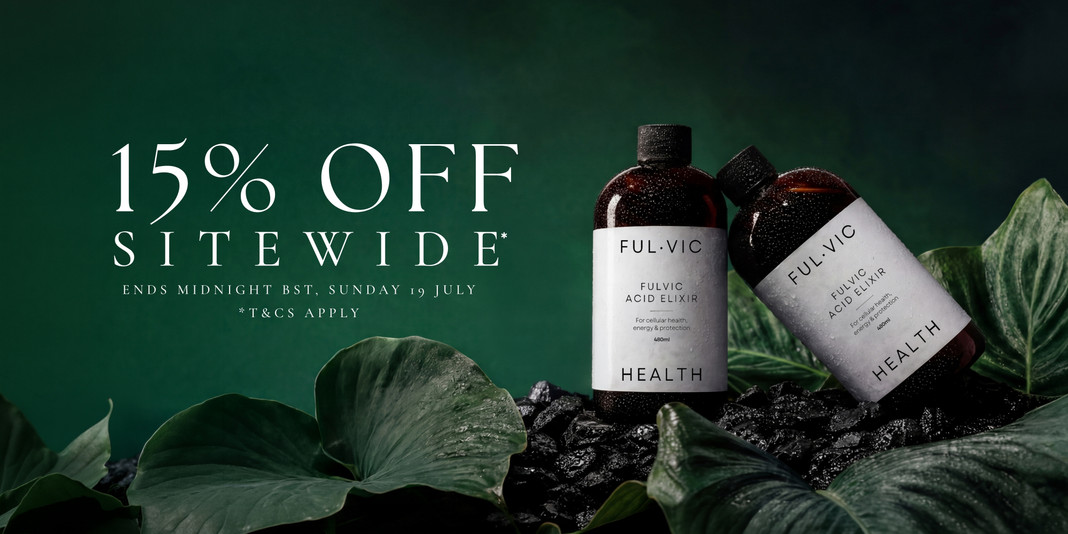
Each story is important, each pioneering compound can profoundly impact our health and wellbeing and I think that is something we should celebrate, so to mark that celebration, we are offering a 15% discount* across the entire site this weekend, with a few exceptions which are noted on the product pages. I leave you with this song, a song that has, in its own way, become as timeless as some of the stories we have shared today and as we come to the end of another Weekend Read, I am dedicating the next Weekend Read to another story, a love story that has spanned the decades.
I have waited twelve years to write the story, and I think that’s all I want to say right now, so please join me next weekend and in the meantime I hope you have a wonderful weekend.
What A Wonderful World by Louis Armstrong; The VH Playlist
With love
Gill x