
Vertigo: Symptoms, Treatment & Natural Remedies
What is Vertigo?
Many people associate dizziness with vertigo but the two are very different. Vertigo is not just feeling dizzy or wobbly, it makes you feel like you are spinning, or everything around you is spinning, when it’s not. Vertigo is generally a sign that there is an issue with the inner ear or brain. Vertigo symptoms can last for seconds, hours or even days. Vertigo treatments vary including medications, repositioning manoeuvres and some natural remedies that may help to combat the symptoms.
What are the common vertigo symptoms?
Vertigo is often a symptom of other health conditions and aside from spinning, other symptoms of vertigo include:
- Balance issues
- Nausea and vomiting
- Hearing loss
- Headaches
- Motion sickness
- Tinnitus
Fortunately, you do not have to live with these symptoms forever.
What are the causes of vertigo?
There are two main types of vertigo: peripheral vertigo and central vertigo. The most common type, peripheral vertigo, is associated with inner ear problems or the vestibular apparatus in the ear responsible for balance. This type of vertigo may be due to:
Benign Paroxysmal Positional Vertigo (BPPV) – tiny crystals in our ears help you to have a sense of your position, and when they break loose, such as when you move your head quickly, or due to injury and age, it can make the sensation of the room spinning.
Labyrinthitis – the labyrinth is a complex system of tunnels and sacs in the inner ear that are responsible for hearing and balance. Inflammation of the labyrinth can lead to vertigo symptoms and gradual loss of hearing if it persists.
Meniere’s disease – a rarer inner ear disorder, and although we do not fully understand this condition, it is thought to be a build-up of fluid in the inner ear, endolymph, which disturbs hearing and balance and is responsible for symptoms of vertigo.
Central vertigo is uncommon and it generally occurs because of a condition to the brain such as a stroke, infection, or injury.
How do you diagnose vertigo?
Your GP may ask several questions as to the duration, when, how and if there are obvious triggers. There is an easily performed test that involves tilting your head in certain positions to see if the spinning kicks in. This is to gauge if the ear crystals have moved out of place. There are several other tests to determine whether the issue is due to the ear or the brain.
What is the best way to treat vertigo?
The best treatments for vertigo are often a combination of repositioning manoeuvres, medications and surgery, which is rare and often due to problems with the brain or a neck injury.
Repositioning manoeuvres such as the Epley manoeuvre are effective if BPPV is the cause, which is very commonly the case. Your GP can perform this and show you how to do this at home.
Motion sickness medications and antihistamines are usually prescribed although they do have side effects.
Is vertigo dangerous?
Vertigo is not usually dangerous however please seek the advice of your GP or healthcare professional if you experience vision changes, severe headaches or slurred speech.
What are the best natural remedies for treating vertigo?
Natural remedies for treating vertigo include Ginger and Gingko Biloba. These two herbal compounds have been the subject of numerous clinical studies.
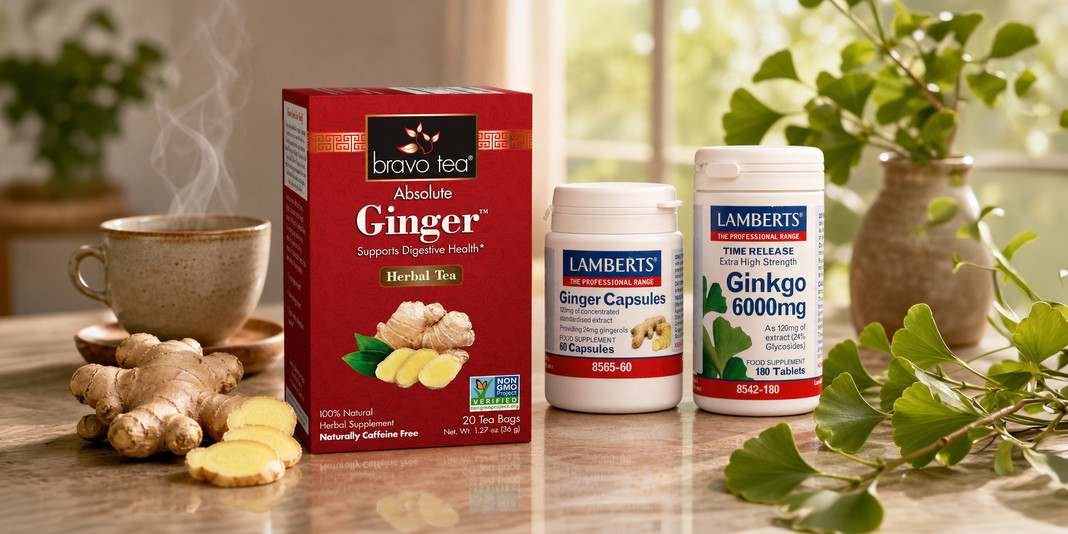
Ginger supplements for vertigo have been used in studies and found to be effective for helping to manage symptoms of vertigo. Ginger root displays powerful anti-emetic, anti-nausea, digestive, and anti-inflammatory properties. Lamberts Ginger Capsules provide a therapeutic strength of ginger root extract containing gingerols and zingerone, the active compounds in ginger known to provide these benefits. This high strength ginger supplement should provide benefits usually within four weeks with daily use, and should be taken daily. 1
Ginger tea may also be supportive during the day and one of the best ginger teas for vertigo is Absolute Ginger Tea by Bravo Tea. There are many ginger teas on the market, but unfortunately many contain small amounts of ginger root and are often combined with other herbal or non-essential ingredients. Absolute Ginger Tea contains only pure ginger root and a small amount of Monk fruit, a natural sweetener with zero calories and powerful antioxidant properties.
Clinical studies indicate that Ginkgo Biloba works for specific types of dizziness caused by restricted blood flow to the brain and the inner ear. It does not appear to work for BPPV caused by the dislodged crystals in the inner ear or for Meniere’s disease. It is nevertheless of value since in some cases, both conditions may co-exist. 2,3
Ginkgo biloba, aside from increasing blood flow to the small vessels in the brain and inner ear, helps the central nervous system adapt to dizziness, and protects the nerves from oxidative damage.
Lamberts Ginkgo 6000 is one of the highest Ginkgo supplements on the market providing 120 mg of Ginkgo biloba extract, GBE, from 6000 mg of dried Ginkgo leaf. This one-a-day Ginkgo supplement provides multiple benefits including enhanced circulation as well as antioxidant protection.
Stay hydrated, sleep well, and reduce stress symptoms.
Conclusion
There are various natural approaches to treating vertigo aimed at alleviating spinning, nausea and balance. As far as natural remedies are concerned, Ginkgo Biloba and Ginger supplements show promise in reducing vertigo symptoms significantly, aside from all the other approaches mentioned in this editorial. Always keep in mind the importance of consulting your healthcare professional.
References:
- Vertigo-reducing effect of ginger root. A controlled clinical study. ORL J Otorhinolaryngol Relat Spec.1986;48(5):282-6. doi: 10.1159/000275883.
- Treatment of Vertigo: A Randomized, Double-Blind Trial Comparing Efficacy and Safety of Ginkgo bilobaExtract EGb 761 and Betahistine
- National Institutes of Health: Ginkgo biloba (EGb 761) in the treatment of equilibrium disorders. A Cesarani1, F Meloni, D Alpini, S Barozzi, L Verderio, P F Boscani