
Scabies: What It Is, How You Get It, and What to Do About It
Scabies is far more common than most people realise and far less connected to hygiene than the stigma suggests.
What Is Scabies?
Scabies is a skin infestation caused by a microscopic mite called Sarcoptes scabiei. The female mite burrows into the upper layers of the skin to lay her eggs, and it is the body’s immune reaction to the mites and their waste that causes the intense itching that characterises this condition. I cannot stress this enough: scabies is not a reflection of poor hygiene. The mite is entirely indiscriminate, and it affects people across every walk of life.¹
The hallmark symptom is a relentless itch that worsens markedly at night, accompanied by a pimple-like rash and thin, irregular burrow tracks in the skin. Common sites include the wrists, the webbing between the fingers, the waistline, the buttocks, and the genitals. In infants and older adults, the face and scalp can also be affected.
Where Does Scabies Come From?
Sarcoptes scabiei has been parasitising human beings for millennia.
One of the most important things I want people to understand is the incubation period. If you have never had scabies before, symptoms may not appear for two to six weeks after infestation.³ Anyone who has had scabies previously will react far sooner, often within a few days of re-exposure.
How Is Scabies Contracted?
Scabies requires prolonged, close skin-to-skin contact to spread, a brief handshake is very unlikely to transmit it.
How to Prevent Scabies
Prevention centres on prompt action and open communication. If you know you have been in close contact with someone who has scabies, I would recommend the following without delay:
- Hot-wash all clothing, bedding, and towels used in the past three days at 60°C or above.
- Seal any items that cannot be washed in a plastic bag for at least 72 hours.
- Vacuum upholstered furniture and mattresses thoroughly.
- Inform all close household contacts immediately so they can seek advice, even if they have no symptoms yet.
- Seek medical advice promptly if you develop an unexplained itch that worsens at night. Early diagnosis and treatment are essential to limiting spread.
Prescription Treatment
Typically, a topical cream such as permethrin is the standard approach, and it is important that all household members treat simultaneously, regardless of symptoms, to prevent re-infestation.
Supporting Skin Recovery Naturally
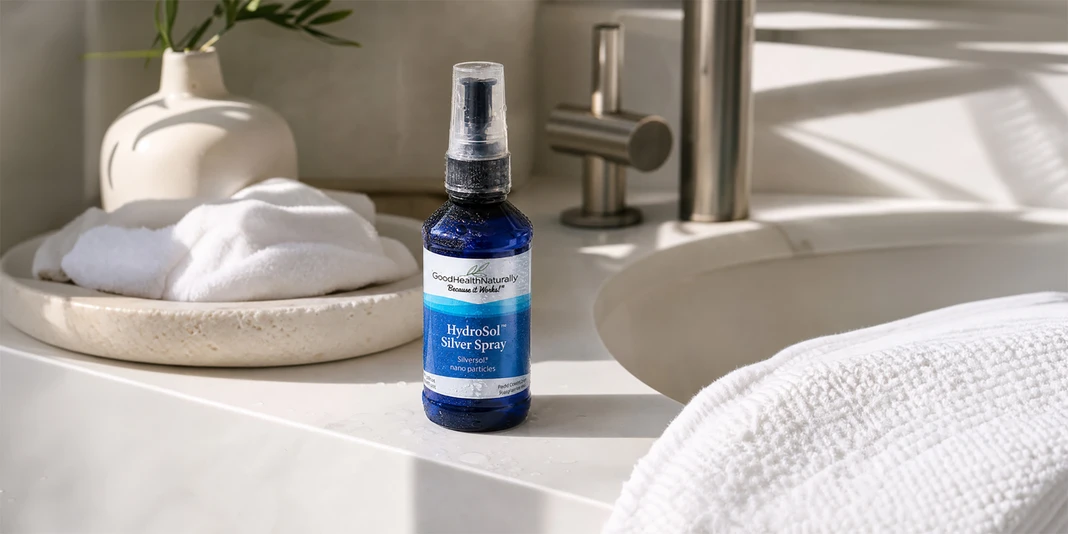
Once medical treatment is complete, many people find that the skin remains irritated and reactive for several weeks. This is not re-infestation but the immune system continuing to respond to residual mite debris. This is where thoughtful, skin-supportive products can play a useful role, and one that I have found to be popular with customers is the Good Health Naturally Hydrosol Silver Spray.
This uses SilverSol® Technology, which distinguishes it from ordinary colloidal silver through its exceptional bioavailability profile. The spray contains 10ppm Hydrosol Silver and is suitable for vegans. Silver has a long history of use in wound care and is found in many medical-grade dressings. It is not a new idea, simply one that has been refined considerably by modern formulation science.⁵ Applied topically to irritated skin post-treatment, many people find it a welcome addition to their recovery routine.
The Things Nobody Tells You
Beyond the clinical picture, there are practical and emotional realities to navigating scabies that are rarely discussed.
The post-treatment itch is normal for weeks after completing treatment. People assume they have been re-infested because the itch persists. In most cases they have not. The immune response simply takes time to settle. Knowing this in advance prevents unnecessary panic and repeat treatments.
Tell people. I know it feels uncomfortable, but informing close contacts is not just courteous, it is essential. Scabies spreads silently during its incubation period, and without open communication a manageable case becomes a much larger problem.
The laundry mountain is real. Treating scabies involves a whole-household clean that many people underestimate. Plan it alongside your treatment, not after, and ask for help if you need it.
It is a temporary condition. Scabies carries a stigma that bears no relationship to the reality. It resolves completely with treatment, and it says nothing about who you are or how you live.
References
- Hay RJ et al. Scabies in the developing world – its prevalence, complications, and management. Clin Microbiol Infect. 2012;18(4):313–323.
- Ramos-e-Silva M. Giovan Cosimo Bonomo (1663–1696): discoverer of the itch mite. Int J Dermatol. 1998;37(8):625–630.
- Chosidow O. Scabies. N Engl J Med. 2006;354(16):1718–1727.
- Fuller LC. Epidemiology of scabies. Curr Opin Infect Dis. 2013;26(2):123–126.
- Alexander JW. History of the medical use of silver. Surg Infect (Larchmt). 2009;10(3):289–292.
