Menopause And Longevity
Did you know that the age of menopause affects longevity? Women who experience menopause after the age of 55 have a life expectancy longer than those with menopause at 40. Every increasing year of age at menopause is associated with a two percent reduction in age-adjusted mortality particularly from ischemic heart disease, a condition caused by the narrowing or blocked arteries supplying blood and oxygen to the heart.1
Whilst women cannot control when menopause occurs, they can take control on how they approach this transition with a longevity mindset.
Women can spend almost a third of their lives after menopause which for most women is usually around the age of 51. This means almost three decades of postmenopausal life with physiological changes occurring way beyond hot flushes and night sweats.
Often menopause is viewed as a momentary problem and anything beyond that is just part of ageing rather than optimising long term health.
Cultural views on menopause
Menopause is often considered as a decline in fertility, loss of youthfulness and a concern that most women must endure. Yet very little is done for women during perimenopause and early menopause which can have major effects on heart health, bone loss, brain function and metabolism for years to come.
What is at stake?
Every hormonal gland communicates with each other using hormones as chemical messengers. So declining oestrogen and progesterone levels have an impact on the health of adrenals, thyroid, pancreas, and all other hormonal glands. This same reduction also has an impact on all other bodily systems aside from hormonal glands creating immediate discomfort and possible long-term health problems.
Ovaries age at twice the rate of any other organ in the body.2 During perimenopause, this fast ageing of the ovaries causes the hormonal fluctuations responsible for the symptoms of perimenopause. The change that occurs after this phase is more concerning as menopause speeds up biological cellular ageing.3
As oestrogen levels go down, immune cells cannot function optimally leading to low level inflammation called “inflammageing”. Inflammation is a key factor in increasing the risk factors for heart disease, arthritis, mood changes, fatigue, and joint pain that can affect the quality of our daily life. Whilst we can treat this individually, they are interconnected with hormonal decline.
HRT is not an option for some women for varying reasons. For this reason, I believe that it would be advisable for these women to take a supplement formulated with a comprehensive blend of herbals which contain plant oestrogens such as Sage Complex. By mimicking oestrogen, these plant extracts are going to help to achieve homeostasis or balance in the body which should help with mitigating “inflammageing” to some extent.
Bone health
One of menopause’s most significant long-term health concern is osteoporosis, also referred to as brittle bone disease. A woman can lose 20% of her bone density during the five to seven years following menopause.4 This is because oestrogen plays a crucial role in maintaining bone mass by signalling the bone cells to stop breaking down bone tissue.
Osteoporosis increases the risk of fractures which for older women can be debilitating and even life-threatening.
It is therefore important to provide long-term protection whether it’s a combination of HRT, herbal remedies with plant oestrogens, and/or ensuring your body’s calcium needs are met.
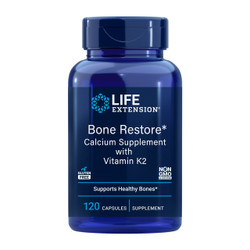
If your dietary calcium is insufficient, you may wish to consider taking a calcium supplement such as Bone Restore Calcium Supplement with Vitamin K2 which provides the medical profession’s gold standard calcium compound, calcium carbonate, with other highly bioavailable calcium compounds, Vitamin D3, Vitamin K2, and other bone health nutrients. Women may wish to consider their calcium intake during perimenopause to provide long-term protection against bone loss. This is exactly the kind of longevity-focussed thinking that I think is important rather than quick fix approaches.
Heart health
Heart disease is one of the leading causes of mortality for women in all stages. Oestrogen provides significant cardiovascular protection which increases the risk factors of heart disease when levels decline during menopause and beyond.
Experimental studies indicate that plant oestrogens, or phytoestrogens, may protect against heart disease by having an impact of lowering LDL cholesterol, improve widening of blood vessels, and preventing the oxidation of cholesterol due to their antioxidant properties.5
Brain health
Research indicates that oestrogen can help to prevent or reduce the risks of cognitive decline. Women have better scores in memory and overall brain function than men in middle age, but this advantage reverses with women showing faster decline in cognition and processing as they age.6
The relationship between hormones and brain health explains why brain fog is such as common menopausal symptom. Again, plant oestrogens, such as those in Sage Complex, show strong potential for protecting the brain through their antioxidant properties, reducing inflammation, and supporting nerve health.7
Prevention strategies
Whilst the onset of menopause represents an opportunity for taking control to improve quality of life and enhance longevity, this ideally could be initiated during the perimenopause phase too.
Beginning from 60s, many chronic diseases emerge that can affect quality of life. Lifestyle changes, smoking cessation, a healthy diet, and moderate exercise are important. For many women, hormone therapy during this decade will not be prescribed or not possible to take in which case the use of supplements containing plant oestrogens may offer some benefits.
References:
- Age at menopause, cause-specific mortality and total life expectancy. Epidemiology. 2005 Jul;16(4):556-62. doi: 10.1097/01.ede.0000165392.35273.d4.
- An Update on Ovarian Aging and Ovarian Reserve Tests Int J Fertil Steril. 2015 Dec 23;9(4):411–415.
- Menopause accelerates biological aging Proc Natl Acad Sci U S A. 2016 Jul 25;113(33):9327–9332.
- Source: Bone Health and Osteoporosis Foundation
- Vascular Effects of Phytoestrogens and Alternative Menopausal Hormone Therapy in Cardiovascular Disease. Mini Rev Med Chem. 2012 Feb 1;12(2):149–174. doi: 10.2174/138955712798995020
- Source: National Institute for Public Health and Environment
- Front Pharmacol. 2021 May 20;12:644103. Estrogenic Plants: to Prevent Neurodegeneration and Memory Loss and Other Symptoms in Women After Menopause.