Glutathione for Thyroid Health
The thyroid gland is a hormonal gland that sits below your voice box at the base of the neck. It is a small gland which plays a huge role in many functions carried out in the body. The thyroid gland regulates metabolism, and hence weight, as well as many other functions which impact on the health of the body.
What does your thyroid gland do?
The thyroid gland is an endocrine gland that releases its hormones directly into the bloodstream and not through a duct. The endocrine system is a series of glands such as the adrenals, pituitary, thymus, pancreas, and a few more, that all release different hormones that all have specific processes to carry out. The endocrine system, including the thyroid gland, regulate metabolism, heart rate, and healthy blood pressure, to name a few. Since hormones are chemical messengers, any imbalance in one hormone can have an impact on the other glands.
Function of the thyroid
The thyroid gland secretes two important hormones into the bloodstream called thyroxine, T4, and triiodothyronine, T3, which help to metabolise fats, protein, and carbohydrates, enhance energy, maintain healthy blood pressure, control heart rate, and regulate body temperature.
The pituitary gland secretes a hormone called TSH which tells the thyroid how much of the thyroid hormones to release. If T3 and T4 levels are high, less TSH is secreted, and the reverse occurs when the T3 and T4 levels are too low, when more TSH is secreted.
Thyroid problems and symptoms
Thyroid problems may be brought on by an autoimmune concern, or they may be due to genetics, or perhaps an iodine deficiency. A diet rich in lean protein, vegetables, fruits, and iodine-rich foods is vital for thyroid health. It is also important to limit inflammation in the body.
There are two categories of problems with the thyroid which are:
- Hypothyroidism, which occurs when the thyroid does not produce sufficient hormones. Symptoms, which are variable, include hair loss, weight gain, fatigue, low energy, constipation, as well as muscle weakness.
- Hyperthyroidism, which occurs when the thyroid produces higher levels of hormones. Symptoms of hyperthyroidism can include weight loss, mood swings, brittle hair, irregular periods, and a racing heart.
The process of thyroid hormone production
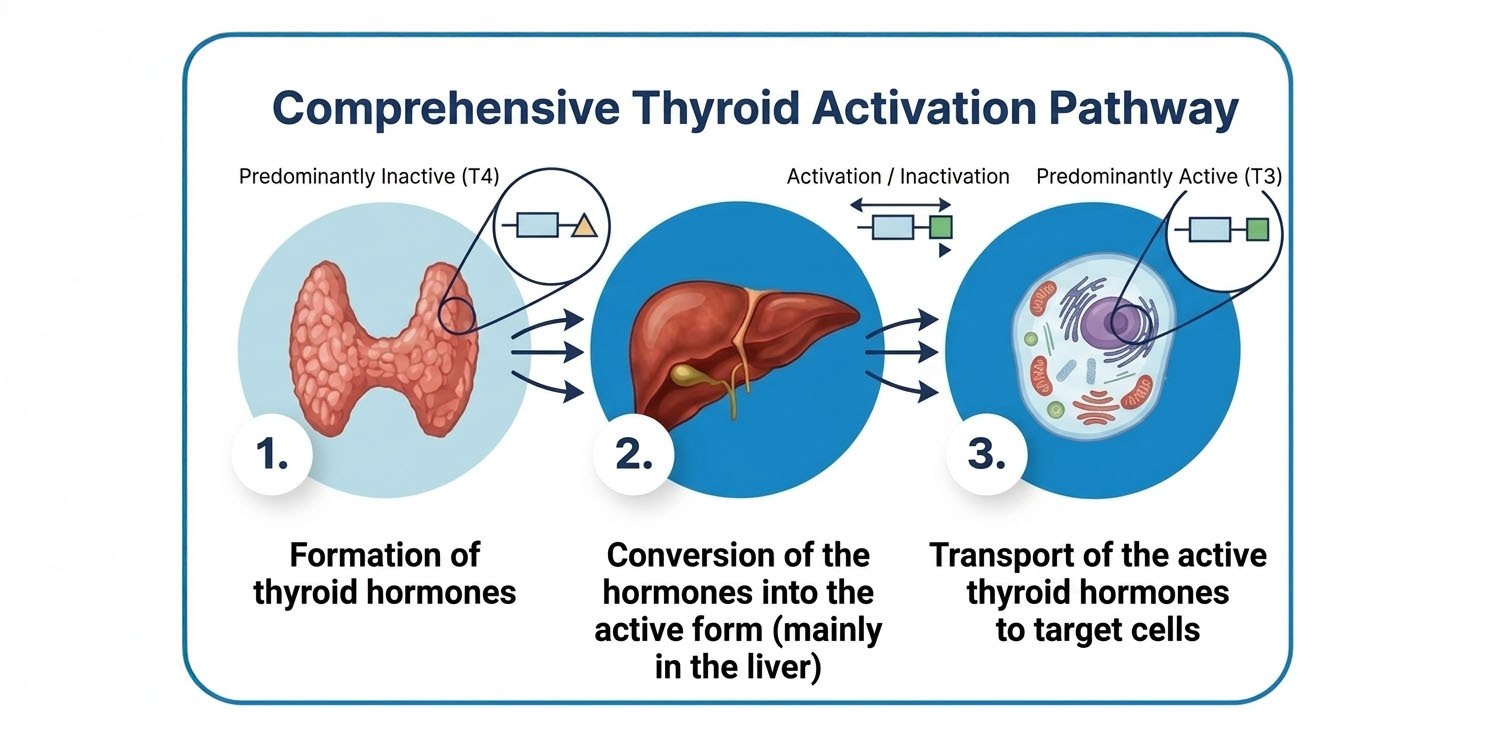
When the pituitary produces TSH, this sends the signal to the thyroid gland to produce mostly thyroxine T4 which is the inactive form. This T4 needs to be converted into the active T3 form, triiodothyronine which is roughly four times more powerful than T4. This conversion takes place in the liver and the T3 is then transported to the cells to perform the important roles of metabolism, energy production, and other important roles.
What is glutathione?
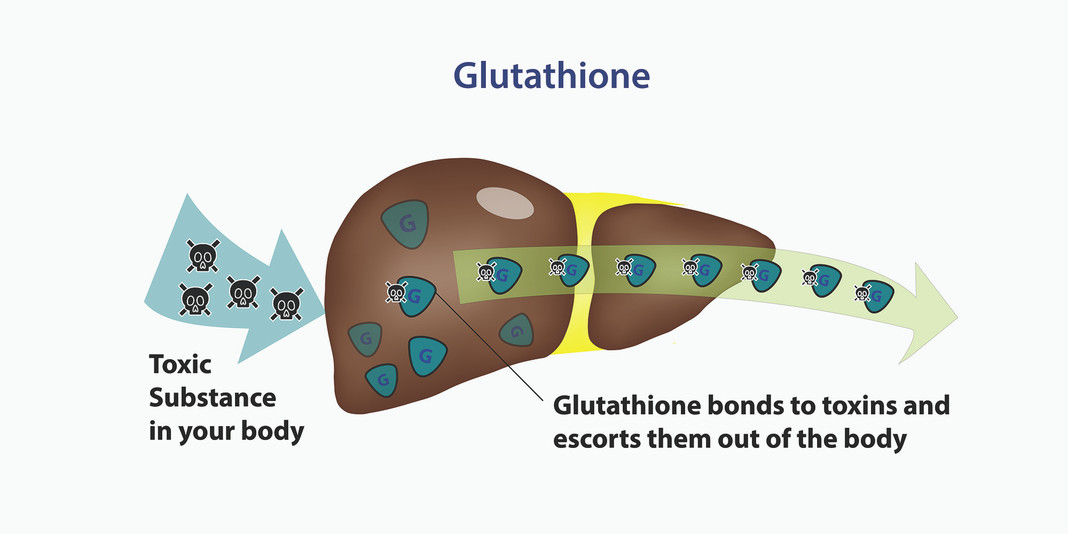
Glutathione is the body’s most important antioxidant often referred to as the master antioxidant. It is made from three amino acids, cysteine, glycine, and glutamic acid. It helps to minimise the impact of free radicals. Glutathione works to neutralise free radicals from the environment, pollution, toxins, and even our body’s own metabolic activity which releases radicals that can stress our glands.
So how does glutathione help the thyroid?
When the thyroid gland produces thyroid hormones, this process releases free radicals that can cause inflammation. This results in oxidative stress which hinders not only the production of thyroid hormones, but also the conversion of T4 into the active T3 form used by cells. This conversion of the inactive T4 to active T3 takes place in the liver.
There is an indicator that shows whether T4 to T3 conversion can occur effectively, the indicator being our levels of glutathione. A link between glutathione and T3 activation was established as early as 1988. This means that even if you have sufficient T4 levels, you may not have sufficient T3 hormone if glutathione levels are low.1
As we age, our glutathione stores decrease meaning we are more susceptible to oxidative stress from free radical damage. Without sufficient glutathione, our body struggles to regulate thyroid gland function.
How do you boost glutathione levels in the body?
You can boost glutathione levels by consuming sulphur-rich vegetables such as broccoli, onions, garlic, asparagus, and avocados. Consume quality protein from fish, chicken, and beef for supplying glutamate and glycine. Also consume foods rich in selenium such as nuts since selenium acts as a cofactor for glutathione production. Regular exercise, sufficient sleep, and lower stress levels also support glutathione production.
You can easily increase glutathione levels by taking supplementation such as DoSe Liposomal Glutathione. DoSe Liposomal Glutathione is one of the best brands containing the clinically studied Setria® Glutathione, and as such we consider it to be best-in-class in its genre.
The use of liposomal glutathione is ideal for the liver where the conversion of inactive to active thyroid hormone takes place and free radicals are produced. Of course, being a master antioxidant, liposomal glutathione liquid protects the whole body from free radical damage.
REFERENCE:
- Goswami A, Rosenberg I. Effects of glutathione on iodothyronine 5'-deiodinase activity. Endocrinology. 1988 Jul 1;123