
Best over-the-counter treatments for back acne
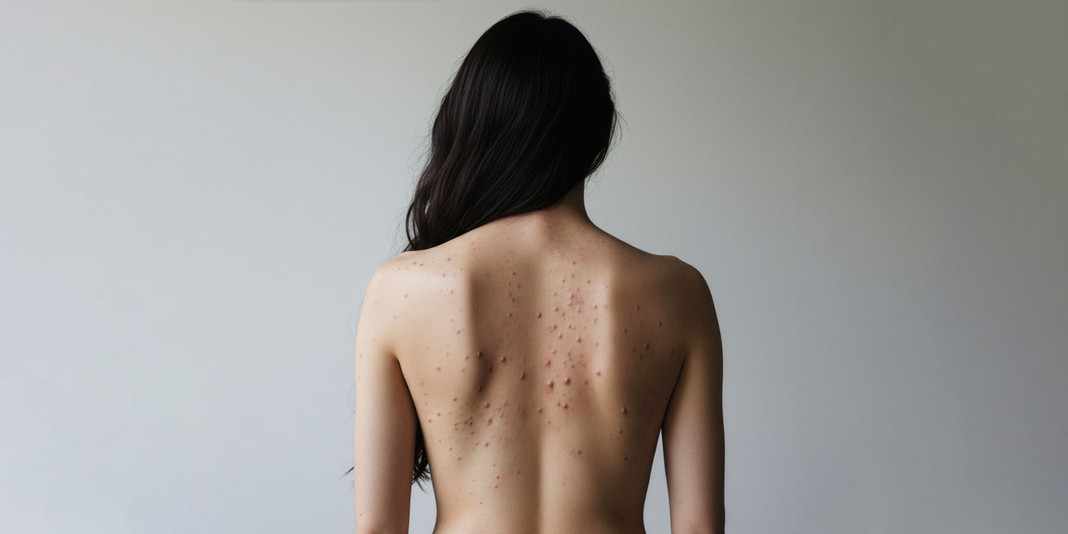
Back acne, “bacne”, is a type of acne that develops on your back. It causes red spots, pimples, whiteheads, or blackheads to appear on your back which can be painful, not pleasant to look at, and annoying.
What causes acne on the back?
Back acne develops like other types of acne or spots. Dead skin cells, sweat, sebum (natural oil), and dirt can clog pores resulting in acne on the back. Like acne, possible causes of back acne include a family history of acne, friction of clothing, hormonal changes, poor hygiene, stress, and skin care products that either clog pores, or soaps and shower gels that strip skin of its natural levels of oil causing more oil production.
What are the symptoms of back acne?
The symptoms of back acne vary and can include blackheads, whiteheads, red spots of different sizes, and these can be with or without pus. In the case of severe acne, nodules may form which are hard lumps underneath skin. Some people get pimples across their shoulders and upper back whilst others get them all over the back down to the waist.
Does back acne mean poor hygiene?
Anybody can get back acne, which can appear at any age and can affect both sexes. But poor hygiene such as infrequent washing can be a major cause of back acne. The back is more moist than other areas and is an environment where bacteria can thrive. The combination build-up of sweat, oil, dead skin cells, and dirt that is not properly washed off often leads to back acne.
How do you diagnose back acne?
Most people can recognise the signs of acne on the back. If these spots keep recurring, you may wish to act by using products to treat back acne or if the symptoms are severe then perhaps a visit to your GP or dermatologist might be worth considering.
How do you get rid of acne on your back?
Treating back acne is like treating facial acne except for the fact that the area is difficult to access so perhaps get some help in applying treatment products.
The most effective back acne products
Antibiotics are frequently used in acne treatment, and this can lead to antibiotic resistance. Studies indicate that Thyme displays the strongest and fastest antibacterial activity especially against Cutibacterium acnes, a bacterium species linked to acne.1
You can treat mild back acne at home using gentle products including hypoallergenic soaps, gentle creams, and shower gels.
Keep your skin clean. Stop using soap for back acne that dries skin as paradoxically this may cause excess sebum to be produced. Instead use a gentle soap-free shower gel such as Thyme Out Face and Body Wash containing only four natural, organic botanicals to gently cleanse and remove dirt, dead skin cells, and excess oil. This non-comedogenic gentle cleanser also displays antimicrobial properties.
Try spraying Thyme Out spray once you have cleansed the body as this works to calm inflammation whilst helping to reduce the numbers of acne-causing bacteria. This spray is often all you need as many creams for treatment of back acne can also clog pores.
It is important to use clean towels and bed linen so that bacteria does not build-up on the surface of skin.
Avoid squeezing or popping these pimples on the back as this can lead to acne scars and hyperpigmentation.
Avoid hair products to drip onto the back as some can cause back spots.
Scar treatment for back acne
If you do happen to get hyperpigmentation or scars, use Sheald Recovery Balm. Sheald Recovery Balm is a fragrance-free antimicrobial cream ideal for post-procedure skin. It calms and soothes skin however it has also been shown to enhance restoration of healthy skin.
Conclusion
Back acne can range from being mildly annoying or very severe. These products mentioned for back acne may be of great value in helping to clear the condition or at least support it even with medical treatment.
REFERENCE:
- Antibacterial and Anti-Inflammatory Activities of Thymus vulgaris Essential Oil Nanoemulsion on Acne Vulgaris Farah M Abdelhamed et al Microorganisms. 2022 Sep 19;10(9):1874. doi:10.3390/microorganisms10091874


